


Categories AI + Business, Media

AI+ Gaming™

  • Discover how AI transforms game design, player engagement, and virtual environments. Build real-world gaming projects using cutting-edge AI technologies.

$82.00

Intermediate
AI+ Gaming.
24h
1 Year.
$82.00
Training 5 or more people?

AI transforms game design, player engagement, and virtual environments.

  • Comprehensive Skill Development Master AI-driven game design, adaptive storytelling, and intelligent NPC development to create immersive, data-enhanced gaming experiences.
  • Industry Recognition Earn a globally recognized certification that validates your expertise in integrating artificial intelligence within modern gaming environments.
  • Hands-On Learning Work on real-world gaming projects, from AI-based character behavior modeling to predictive player analytics, enhancing creativity and technical precision.
  • Career Advancement Unlock career opportunities in game development, AI simulation design, virtual production, and interactive entertainment industries.
  • Future-Ready Expertise Stay at the forefront of gaming innovation with cutting-edge knowledge in generative AI, immersive simulations, and intelligent gameplay systems.
  • Industry-Relevant Curriculum Gain expertise in AI-driven game design, player behavior modeling, and adaptive gameplay mechanics.
  • Hands-On Learning Work on real gaming projects integrating AI for character behavior, world generation, and personalization.
  • Career Advancement Boost your profile for roles in game development, AI engineering, and interactive entertainment design.
  • Cutting-Edge Tools Learn to use leading AI frameworks and gaming engines to develop immersive, intelligent experiences.
  • Global Recognition Earn a certification that validates your AI and gaming skills with credibility across the tech and gaming industries.

Course Curriculum

Module 1: Introduction to AI in Games
1.1 What is AI? 1.2 Evolution of AI in the Gaming Industry 1.3 Types of AI in Games 1.4 Benefits, Challenges, and Innovations in Game AI

Module 2: Game Design Principles using AI
2.1 Understanding Game Mechanics and Player Experience 2.2 Role of AI in Gameplay and Narrative Design 2.3 Designing Game Environments for AI Interaction 2.4 AI-Driven Behavior vs Traditional Scripted Logic 2.5 Case Study: Dynamic AI and Narrative Adaptation in Middle earth: Shadow of Mordor 2.6 Hands-On Exercise: Designing Adaptive NPC Behavior and Environment Interaction

Module 3: Foundations of AI in Gaming
3.1 Core AI Concepts for Gaming 3.2 Search Algorithms and Pathfinding 3.3 AI Behavior Modeling and Procedural Content Generation (PCG) 3.4 Introduction to Machine Learning and Reinforcement Learning 3.5 Case Study: AI in Minecraft — Procedural Content Generation and Agent Navigation 3.6 Hands-On: Implementing A* Pathfinding and FSM for NPC Behavior

Module 4: Reinforcement Learning Fundamentals
4.1 Core Concepts: States, Actions, Rewards, Policies, Q-Learning: 4.2 Exploration versus Exploitation in Learning Systems: 4.3 Overview of Deep Q Networks (DQN) and Policy Gradient Methods 4.4 Case Study: Reinforcement Learning in DeepMind’s AlphaGo 4.5 Hands-On: Train a Reinforcement Learning Model on OpenAI Gym’s GridWorld

Module 5: Planning and Decision Making in Games
5.1 Minimax Algorithm and Alpha-Beta Pruning 5.2 Monte Carlo Tree Search (MCTS) 5.3 Applications in Board Games and Real-Time Strategy (RTS) Games 5.4 Case Study: Strategic AI in StarCraft II – Combining Planning Algorithms for Real-Time Strategy 5.5 Hands-on Implementation: Guides on implementing the Minimax algorithm for Tic-Tac-Toe

Module 6: AI Techniques in 2D/3D Virtual Gaming Environments Basic
6.1 Overview of 2D and 3D Game Environments 6.2 Environment Representation Techniques 6.3 Navigation and Pathfinding in 2D/3D Spaces 6.4 Interaction and Behavior Systems in Virtual Environments 6.5 Case Study: Navigation and Interaction AI in The Legend of Zelda: Breath of the Wild 6.6 Hands-On: Building Basic Navigation and Interaction in 2D and 3D Game Environments

Module 7: Adaptive Systems and Dynamic Difficulty
7.1 Adaptive Systems Overview 7.2 Dynamic Difficulty Adjustment (DDA) Principles 7.3 Adaptive Storytelling, Personalization, and Player Profiling 7.4 AI Techniques in Adaptive Systems 7.5 Implementation Strategies and Tools 7.6 Case Study: Dynamic Enemy Management and Replayability with Left 4 Dead’s AI Director 7.7 Hands-On: Developing an Adaptive Dynamic Difficulty System in Unity

Module 8: Future of AI in Gaming
8.1 Generalist AI Agents and Transfer Learning 8.2 AI-Powered Game Design and Testing Tools 8.3 Ethical Considerations and AI Transparency 8.4 Emerging Technologies: VR/AR AI and AI in Esports Coaching

Module 9: Capstone Project

Learning Objectives

  • Develop a Strong Understanding of AI in Gaming: Gain a solid grasp of how AI transforms modern game development and enhances gameplay.
  • Learn Key AI Concepts for Game Design: Explore intelligent NPC design, procedural content generation, and adaptive game mechanics for immersive experiences.
  • Apply AI Frameworks and Tools: Hands-on experience using AI tools to create responsive and dynamic gaming environments.
  • Enhance Gameplay Personalization and Balance: Learn to use AI to personalize gameplay, adjust difficulty levels, and craft dynamic storytelling.
  • Equip with Ethical AI Knowledge: Understand ethical considerations, fairness in game AI, and the responsible use of player data.

Resource Center

  • Videos, Use cases, Workshops, E-books and tools.

Target Audience

  • Aspiring Game Developers.
  • AI Enthusiasts.
  • Game Designers.
  • Software Engineers.
  • Students & Researchers.

Job Roles & Industry Outlook 

Game Data Scientist
Analyze player data to develop predictive models, personalize experiences, and optimize in-game performance and engagement metrics.
Al Systems Designer
Design and implement Al-driven mechanics such as NPC behavior, procedural world generation, and adaptive difficulty systems.
Gaming Technology Manager
Lead the integration of Al tools and engines to improve development workflows, game realism, and production efficiency.
Chief Gaming Innovation Officer (CGIO)
Drive Al adoption in gaming strategy, championing innovation, personalization, and the next generation of intelligent entertainment experiences.
Al Game Developer
Build intelligent game systems that adapt to player behavior, enhance gameplay dynamics, and create immersive, responsive gaming experiences.

Exam Information

Duration
90 minutes
Passing Score
70% (35/50)
Format
50 multiple-choice/multiple-response questions
Delivery Method
Online via proctored exam platform (flexible scheduling)
Fees include
One year of access to course content, including continuous updates. Certification exam. One exam re-take.

Exam Blueprint:

Introduction to AI in Games – 5%
Game Design Principles using AI – 11%
Foundations of AI in Gaming – 12%
Reinforcement Learning Fundamentals – 12%
Planning and Decision Making in Games – 12%
AI Techniques in 2D/3D Virtual Gaming Environments Basic – 12%
Adaptive Systems and Dynamic Difficulty – 12%
Future of AI in Gaming – 12%
Capstone Project – 12%

Explore our Schedules

Sep 20 - Sep 22
GMT 09:00 AM - 05:00 PM
In-person
Abu Dhabi
724.5$
3 Days
Nov 8 - Nov 10
GMT 09:00 AM - 05:00 PM
In-person
Kuwait
724.5$
3 Days

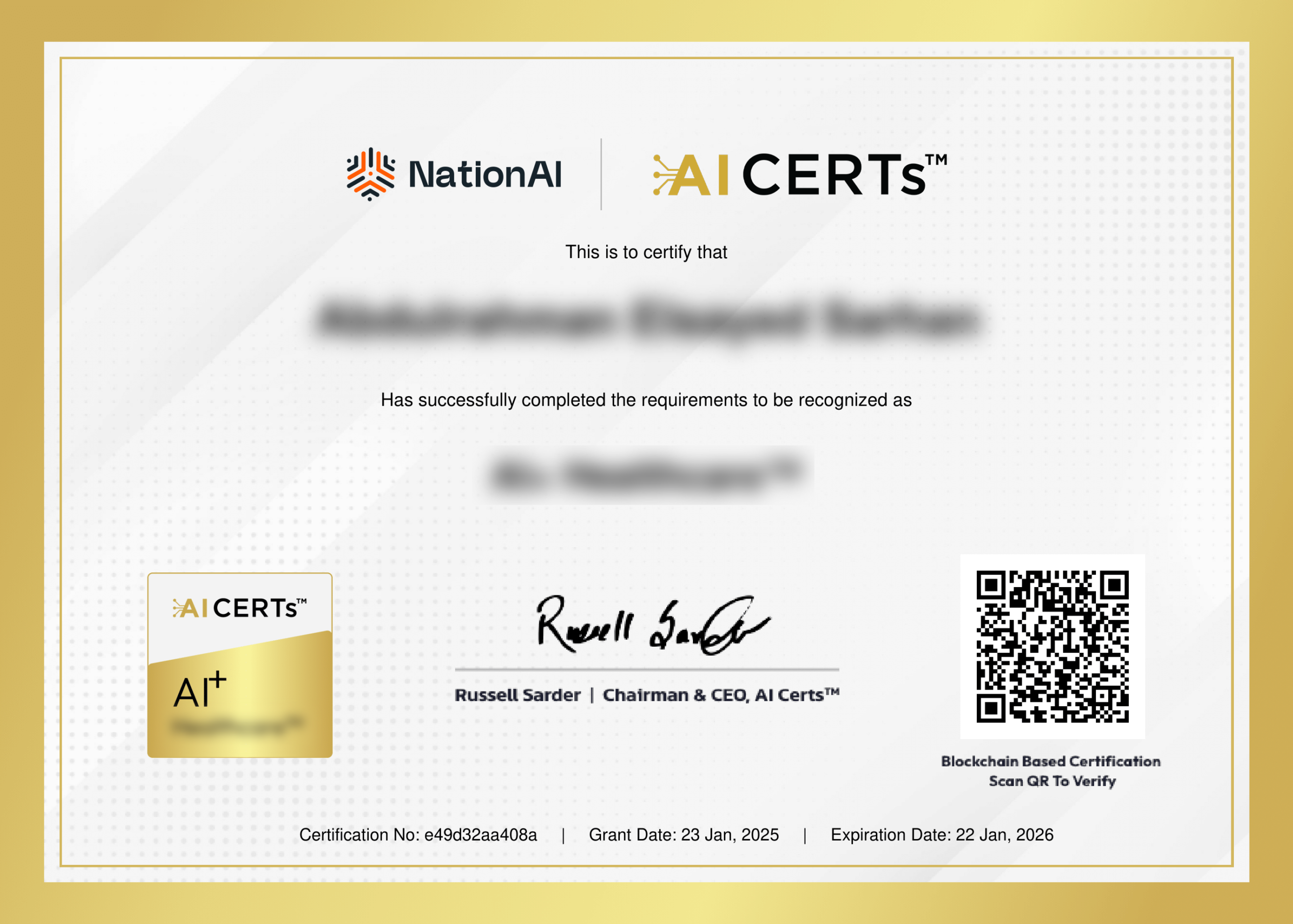
Certificate of Completion

AI+ Gaming.

$82.00

Intermediate
AI+ Gaming.
24h
1 Year.
$82.00
Training 5 or more people?

Learners Also Enrolled For

Want to receive push notifications for all major on-site activities?

Don't have an account yet? Sign up for free