

Categories Security

AI+ Security Level 1™

  • Empowering Cybersecurity with AI

$174.50

Intermediate
AI+ Security Level 1.
40h
1 Year.
$174.50
Training 5 or more people?

Empowering Cybersecurity with AI.

  • Start your AI security journey with our all-in-one bundle. Explore core concepts in AI-driven protection, vulnerability management, and intelligent threat response.
  • Comprehensive Learning: Explore AI and cybersecurity integration through Python, machine learning, and threat mitigation to build a strong technical foundation.
  • Cutting-Edge Knowledge: Dive into advanced topics like AI-based authentication and GANs to understand next-gen cybersecurity strategies and innovations.
  • AI-Driven Threat Detection: Learn to detect malware, phishing, and anomalies using machine learning, enhancing your ability to predict and prevent attacks.
  • Hands-on Approach: Apply concepts in a Capstone Project, solving real-world cybersecurity challenges by leveraging AI tools and practical problem-solving skills.
  • Boost Strategic Decision-Making with AI Analytics: Master AI models to analyze business data, predict outcomes, and enable more informed, real-time decisions that enhance competitive advantage.
  • Industry Relevance: Stay ahead in cybersecurity by mastering AI applications, making you a valuable asset for future-focused security roles and organizations.

Course Curriculum

Module 1: Introduction to Cybersecurity
1.1 Definition and Scope of Cybersecurity 1.2 Key Cybersecurity Concepts 1.3 CIA Triad (Confidentiality, Integrity, Availability) 1.4 Cybersecurity Frameworks and Standards (NIST, ISO/IEC27001) 1.5 Cyber Security Laws and Regulations (e.g., GDPR, HIPAA) 1.6 Importance of Cybersecurity in Modern Enterprises 1.7 Careers in Cyber Security

Module 2: Operating System Fundamentals
2.1 Core OS Functions (Memory Management, Process Management) 2.2 User Accounts and Privileges 2.3 Access Control Mechanisms (ACLs, DAC, MAC) 2.4 OS Security Features and Configurations 2.5 Hardening OS Security (Patching, Disabling Unnecessary Services) 2.6 Virtualization and Containerization Security Considerations 2.7 Secure Boot and Secure Remote Access 2.8 OS Vulnerabilities and Mitigations

Module 3: Networking Fundamentals
3.1 Network Topologies and Protocols (TCP/IP, OSI Model) 3.2 Network Devices and Their Roles (Routers, Switches, Firewalls) 3.3 Network Security Devices (Firewalls, IDS/IPS) 3.4 Network Segmentation and Zoning 3.5 Wireless Network Security (WPA2, Open WEP vulnerabilities) 3.6 VPN Technologies and Use Cases 3.7 Network Address Translation (NAT) 3.8 Basic Network Troubleshooting

Module 4: Threats, Vulnerabilities, and Exploits
4.1 Types of Threat Actors (Script Kiddies, Hacktivists, Nation-States) 4.2 Threat Hunting Methodologies using AI 4.3 AI Tools for Threat Hunting (SIEM, IDS/IPS) 4.4 Open-Source Intelligence (OSINT) Techniques 4.5 Introduction to Vulnerabilities 4.6 Software Development Life Cycle (SDLC) and Security Integration with AI 4.7 Zero-Day Attacks and Patch Management Strategies 4.8 Vulnerability Scanning Tools and Techniques using AI 4.9 Exploiting Vulnerabilities (Hands-on Labs)

Module 5: Understanding of AI and ML
5.1 An Introduction to AI 5.2 Types and Applications of AI 5.3 Identifying and Mitigating Risks in Real-Life 5.4 Building a Resilient and Adaptive Security Infrastructure with AI 5.5 Enhancing Digital Defenses using CSAI 5.6 Application of Machine Learning in Cybersecurity 5.7 Safeguarding Sensitive Data and Systems Against Diverse Cyber Threats 5.8 Threat Intelligence and Threat Hunting Concepts

Module 6: Python Programming Fundamentals
6.1 Introduction to Python Programming 6.2 Understanding of Python Libraries 6.3 Python Programming Language for Cybersecurity Applications 6.4 AI Scripting for Automation in Cybersecurity Tasks 6.5 Data Analysis and Manipulation Using Python 6.6 Developing Security Tools with Python

Module 7: Applications of AI in Cybersecurity
7.1 Understanding the Application of Machine Learning in Cybersecurity 7.2 Anomaly Detection to Behavior Analysis 7.3 Dynamic and Proactive Defense using Machine Learning 7.4 Utilizing Machine Learning for Email Threat Detection 7.5 Enhancing Phishing Detection with AI 7.6 Autonomous Identification and Thwarting of Email Threats 7.7 Employing Advanced Algorithms and AI in Malware Threat Detection 7.8 Identifying, Analyzing, and Mitigating Malicious Software 7.9 Enhancing User Authentication with AI Techniques 7.10 Penetration Testing with AI

Module 8: Incident Response and Disaster Recovery
8.1 Incident Response Process (Identification, Containment, Eradication, Recovery) 8.2 Incident Response Lifecycle 8.3 Preparing an Incident Response Plan 8.4 Detecting and Analyzing Incidents 8.5 Containment, Eradication, and Recovery 8.6 Post-Incident Activities 8.7 Digital Forensics and Evidence Collection 8.8 Disaster Recovery Planning (Backups, Business Continuity) 8.9 Penetration Testing and Vulnerability Assessments 8.10 Legal and Regulatory Considerations of Security Incidents

Module 9: Open Source Security Tools
9.1 Introduction to Open-Source Security Tools 9.2 Popular Open Source Security Tools 9.3 Benefits and Challenges of Using Open-Source Tools 9.4 Implementing Open Source Solutions in Organizations 9.5 Community Support and Resources 9.6 Network Security Scanning and Vulnerability Detection 9.7 Security Information and Event Management (SIEM) Tools (Open-Source options) 9.8 Open-Source Packet Filtering Firewalls 9.9 Password Hashing and Cracking Tools (Ethical Use) 9.10 Open-Source Forensics Tools

Module 10: Securing the Future
10.1 Emerging Cyber Threats and Trends 10.2 Artificial Intelligence and Machine Learning in Cybersecurity 10.3 Blockchain for Security 10.4 Internet of Things (IoT) Security 10.5 Cloud Security 10.6 Quantum Computing and its Impact on Security 10.7 Cybersecurity in Critical Infrastructure 10.8 Cryptography and Secure Hashing 10.9 Cyber Security Awareness and Training for Users 10.10 Continuous Security Monitoring and Improvement

Module 11: Capstone Project
11.1 Introduction 11.2 Use Cases: AI in Cybersecurity 11.3 Outcome Presentation

Optional Module: AI Agents for Security Level 1
1. Understanding AI Agents 2. What Are AI Agents 3. Key Capabilities of AI Agents in Cyber Security 4. Applications and Trends for AI Agents in Cyber Security 5. How Does an AI Agent Work 6. Core Characteristics of AI Agents 7. Types of AI Agents

Learning Objectives

  • Our comprehensive course, AI+ Security level 1 offers professionals a thorough exploration of the integration of AI and Cybersecurity.
  • Beginning with fundamental Python programming tailored for AI and Cybersecurity applications, participants delve into essential AI principles before applying machine learning techniques to detect and mitigate cyber threats, including email threats, malware, and network anomalies.
  • Advanced topics such as user authentication using AI algorithms and the application of Generative Adversarial Networks (GANs) for Cybersecurity purposes are also covered, ensuring participantsare equipped with cutting-edge knowledge.
  • Practical application is emphasized throughout, culminatingin a Capstone Project where attendees synthesize their skills to address real-world cybersecurity challenges, leaving them adept in leveraging AI to safeguard digital assets effectively.

Resource Center

  • Videos, Use cases, Workshops, E-books and tools.

Target Audience

  • Cybersecurity Professionals and Analysts.
  • Penetration Testers.
  • Security Consultants.
  • Incident Responders.
  • Security Engineers.
  • Threat Hunters.
  • Compliance Auditors.
  • Network Security Administrators.
  • Forensic Analysts.
  • IT Professionals and System Administrators.
  • Risk Management Specialists.
  • Business Leaders and Decision Makers.
  • Software Developers.

Job Roles & Industry Outlook 

Al-Powered Incident Response Analyst
Specializes in Al-driven security incident management, post- incident investigations, and deploying Al-based recovery strategies
Al Security Analyst
Responsible for leveraging Al technologies to monitor, detect, and respond to cybersecurity threats, ensuring robust security measures are in place.
Threat Intelligence Specialist
Uses Al tools to analyze cyber threats, identify vulnerabilities, and provide insights for proactive threat prevention and mitigation
Cybersecurity Engineer (Al-focused)
Develops and implements Al-driven security solutions to protect networks and systems from potential cyberattacks

Exam Information

Duration
90 minutes
Passing Score
70% (35/50)
Format
50 multiple-choice/multiple-response questions
Fees include
One year of access to course content, including continuous updates. Certification exam. One exam re-take.

Exam Blueprint:

Introduction to Cybersecurity 6%
Operating System Fundamentals 7%
Networking Fundamentals 7%
Threats, Vulnerabilities & Exploits 10%
Understanding AI and Machine Learning 11%
Python Programming Fundamentals 11%
AI Applications in Cybersecurity 11%
Incident Response & Disaster Recovery 12%
Open Source Security Tools 11%
Securing the Future / Emerging Concepts 8%
Capstone Project / Practical Application 6%

Explore our Schedules

Oct 25 - Oct 29
GMT 09:00 AM - 05:00 PM
In-person
Dammam
880.5$
5 Days
Nov 8 - Nov 12
GMT 09:00 AM - 05:00 PM
In-person
Doha
880.5$
5 Days
Aug 9 - Aug 13
GMT 09:00 AM - 05:00 PM
In-person
Dubai
880.5$
5 Days
Oct 25 - Oct 29
GMT 09:00 AM - 05:00 PM
In-person
Kuwait
880.5$
5 Days
Nov 8 - Nov 12
GMT 09:00 AM - 05:00 PM
In-person
Muscat
880.5$
5 Days
Jul 19 - Jul 30
GMT 06:00 PM - 10:00 PM
LVT
Zoom
643.2$
10 Days
Nov 30 - Dec 13
GMT 06:00 PM - 10:00 PM
LVT
Zoom
643.2$
10 Days

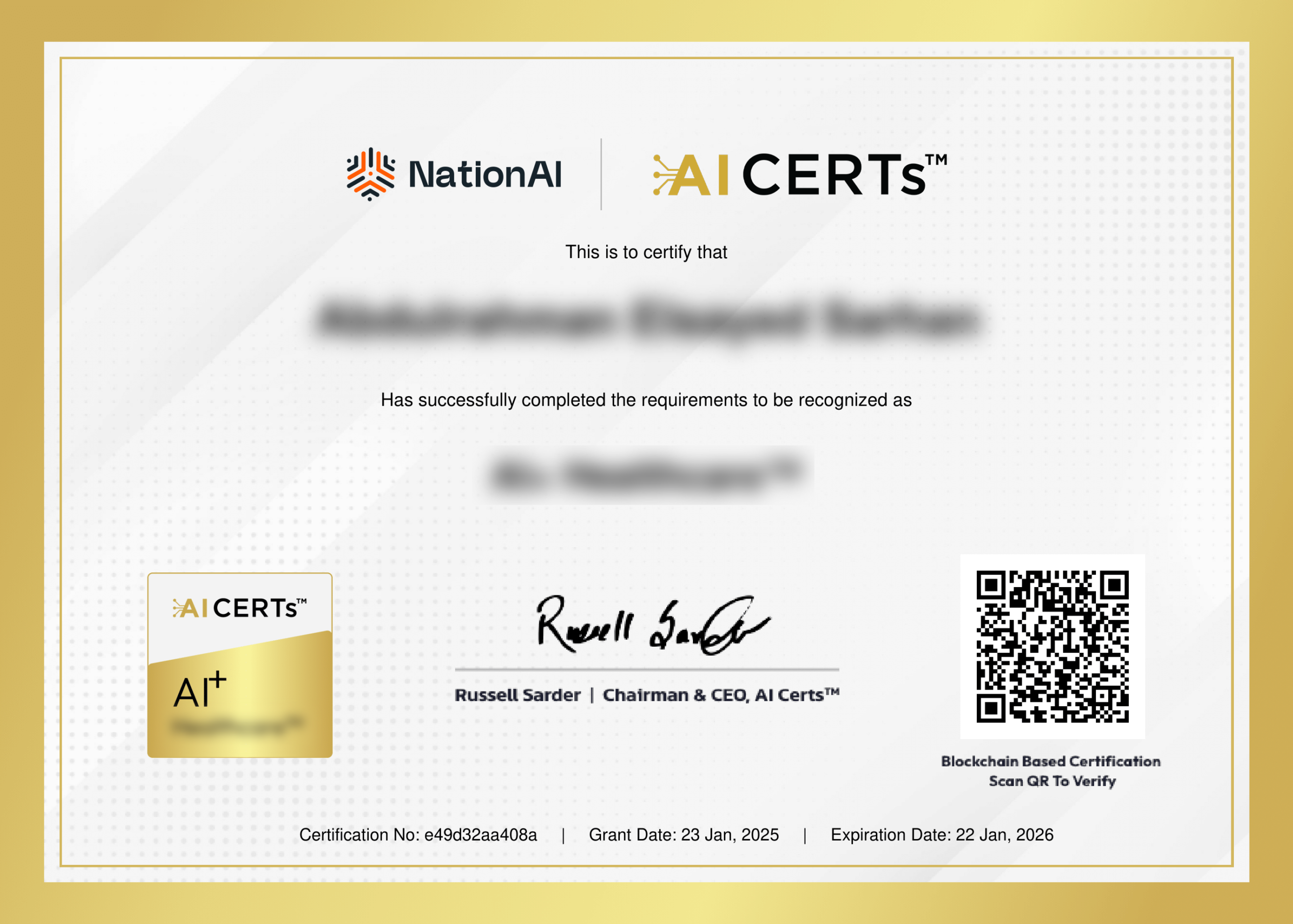
Certificate of Completion

AI+ Security Level 1.

$174.50

Intermediate
AI+ Security Level 1.
40h
1 Year.
$174.50
Training 5 or more people?

Learners Also Enrolled For

Want to receive push notifications for all major on-site activities?

Don't have an account yet? Sign up for free